DHCP and DNS
Dynamic Host Configuration Protocol (DHCP) Every device on a network needs a unique IP address. While these addresses can be manually assigned that is not […]
Dynamic Host Configuration Protocol (DHCP) Every device on a network needs a unique IP address. While these addresses can be manually assigned that is not […]

IP stands for Internet Protocol. The v in IPv4 and IPv6 is Version. We use IPv4 and IPv6 for identifying nodes on a network, each […]

When sending data over a network there is a possibility of interference and therefore errors occurring in the data. Here are two methods of detecting […]

Transmission Control Protocol / Internet Protocol (TCP/IP) is a set of communication protocols which specify how data is transferred across networks (and therefore the internet). […]

Local A local variable is only available to the module (or block of code) it is within. That is its “scope”. The variable total is […]

Transferring data over networks is inherently insecure. The traffic passes through multiple routers and if any of those routers are compromised by a hacker or […]
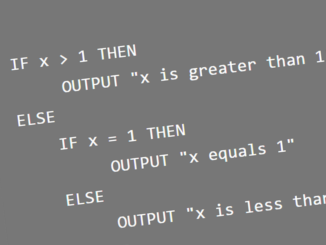
The code below is Pseudocode. Sequence Sequence is each statement after another. x = 0 OUTPUT (“Hello world”) are examples. Selection When a decision needs […]

Protocols are agreed forms of communication. Computer networks require protocols to transfer different types of data reliably and efficiently – and sometimes securely – most protocols […]

Transmission media (or medium) refers to any method of network connection, whether it is wired or wireless. They all transfer packets of data using different […]

Computers store information as binary 1’s and 0’s. These are known as bits. Groups of 8 bits are bytes. Ultimately, whatever data we store in […]
Copyright © 2026 | WordPress Theme by MH Themes