
Characteristics of object-oriented programming concepts
Object-oriented programming (OOP) is a way of writing computer programs that focuses on organising code into reusable, modular components called objects. Objects are like real-world […]
Object-oriented programming (OOP) is a way of writing computer programs that focuses on organising code into reusable, modular components called objects. Objects are like real-world […]

Acceptance testing This is the final testing phase based on user needs, where the functional requirements gathered during the “investigate” stage are verified to ensure […]

NOTE: You do not have to “memorise” the code examples below, but you must be able to understand what each line of code does! You […]

Validate input before processing All inputs to a program should be validated for correctness before they are used in further processing to prevent runtime or […]

An array is a collection of elements, each identified by at least one array index or key. An array is a data structure that stores […]

Arithmetic operators +, -, *, /, % Arithmetic operators perform common mathematical operations on values. ‘%’ is for modulo (remainder after division). Example: 5 % […]

Investigate Phase Design Phase Develop Phase Evaluate Phase
Local A local variable is only available to the module (or block of code) it is within. That is its “scope”. The variable total is […]
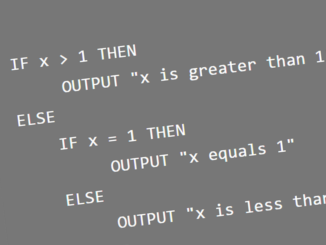
The code below is Pseudocode. Sequence Sequence is each statement after another. x = 0 OUTPUT (“Hello world”) are examples. Selection When a decision needs […]

Computers store information as binary 1’s and 0’s. These are known as bits. Groups of 8 bits are bytes. Ultimately, whatever data we store in […]
Copyright © 2026 | WordPress Theme by MH Themes